SuoKuulo
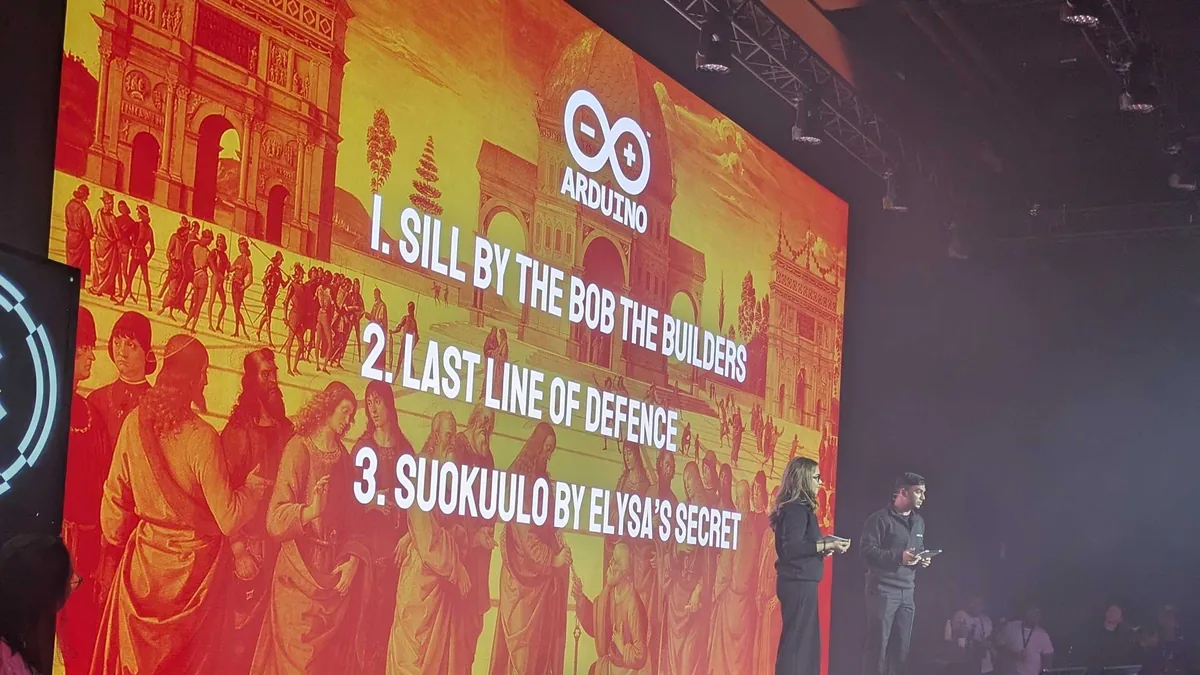
An offline AI ear for Finnish peatlands: an Arduino UNO Q that recognises bog birds on the device and tells you whether a restored bog is coming back to life. Built by my team at Junction 2026: 3rd place in Arduino's challenge.
- Role
- Team project of Elysa's Secret. I worked on Spreadbot at the same event
- When
- 13 to 15 November 2026, on site in Espoo, Finland
- Event
- Junction 2026 in Espoo, Europe's biggest hackathon, with challenges set by Google DeepMind, OpenAI, Meta, NVIDIA, Intel, AstraZeneca, AfterQuery, Arduino and 20+ more companies. Challenge: The Green European Renaissance, by Arduino
- Result
- 3rd place
- Tools
- Links
- VideoDemoCode on GitHubSlides
Video
The problem
Peatlands cover about a third of Finland, and more than half of them have been drained. Finland and the EU are now restoring them, and the EU Nature Restoration Regulation requires countries to monitor and report the progress. Today that still means experts listening a few mornings a year, so most restored sites are never checked.
How it works
- AI on the device: BirdNET runs on the UNO Q itself, on 3-second windows, in about half a second each. No cloud, no internet.
- Birds that mean a healthy bog: golden plover, wood sandpiper, snipe, curlew, whimbrel, crane and others, a list reviewed by Pieter van Eijk at Wetlands International.
- A health score from 0 to 100: species heard against what a healthy bog should sound like that season. The device can learn its own site's baseline, so it works as a before-and-after tool for rewetting.
- Both brains of the UNO Q: Linux runs the audio, the AI and a local dashboard; the microcontroller packs an hourly 16-byte LoRa-ready summary and runs a watchdog, so a remote office can tell a dead device from a quiet bog.
- Private by design: no audio is ever stored or sent, only species names and timestamps.
Credits
Built by my teammates in Elysa's Secret. The idea came from Eva Hernández Herrero, Head of Peatlands at Wetlands International and the mother of a team member. Bird recognition by BirdNET (Cornell Lab of Ornithology and Chemnitz University of Technology); demo recordings from Xeno-canto.
Back to Junction 2026 Video on YouTube Code on GitHub
Our other Junction 2026 projects: Spreadbot · OnCall · FocusLens